[taken from Chapter 1 Manx Worthies,
A.W.Moore, 1901]
JAMES WILKS (b. 1719, d. 1777).
Nothing is known of his early
life till 1742, when he was ordained by Bishop Wilson, and appointed Curate
of St. German's " with power to dispose of the Glebe and all other profits to
the best advantage " As there was no school in that parish, he at once interested
himself in the matter, and obtained a piece of ground near St. John's, where
it was ultimately built. In 1745, he became vicar of the parish, and, in the
same year, he was sent by the bishop to Dublin to obtain arrears of interest
on some money left to the Academic Fund under
Bishop Barrow's will, which had been invested in that city. His mission was
successful, and his conduct of it received the bishop's approbation. In 1750,
he was appointed episcopal registrar;. and, in 1752, Vicar of Michael. He was
very intimately connected with Bishop Wilson, who, in his later years, greatly
depended upon him. As surviving curator of his will, to which he had been a
witness, he carried out the bishop's instructions respecting his funeral.
He went to London in 1755, and again in 1756, in connexion with
the chancery suit against the Earl of Derby for the recovery
of the impropriate tithe. His diary of these journeys, and the
business transacted during them, is of considerable interest. On his
first journey, he dined with the Duke of Atholl, who asked him many
questions about the island and the bishopric, and, a few days after,
introduced him to Dr. Hildesley, Vicar of Hitchin whom he had
appointed to succeed Bishop Wilson. The bishop elect entered into a
long conversation with him, and was much pleased with what he heard.
In 1766, he undertook another journey to London, to assist in the
defence of the clergy in the dispute between them and the fishermen
concerning the fish tithe, the latter having appealed from the
decision of the governor, which was against them, to the King in
Council. The governor's decision was, however, confirmed. On this
occasion, he had an interview with the Archbishop of York, to whom he
represented the deplorable state of the island, where there had been
a very bad harvest; and he laid before him various proposals with
regard to trade, which, he contended, would benefit the people, and m
no way prejudice the revenue. The archbishop and the Bishop of Durham
promised to do what they could, but it was late in the session, and
Parliament was embarrassed with North American affairs, so nothing
was done at that time. However, in the next year, an Act was passed
for the encouragement of Manx trade and manufactures.
At this period there were disturbances and riots in London caused
by a constitutional struggle, in which John Wilkes was the most
conspicuous character. JAMES WILKS was, consequently, often
questioned as to his relationship to his namesake. Referring to this,
he says " For my own part I would wish for the present, my name was
any other than Wilks, for wherever I have occasion to tell my name I
am stared at, and asked whether I am not a relative of the 'Great
Wilkes,' as he is called." In 1769, he became one of the vicars
general and in 1771 Rector of Ballaugh. On his appointment there, he
and the Vicar of German perambulated a great part of the boundaries
of their parishes. attended by a large number of parishioners, and
fixed the limits in several doubtful places. He had taken part in the
translation and revision of the Manx Bible, having translated Joshua
and the Epistles, and he also translated part of the Liturgy.
In 1772, Bishop Hildesley died, and JAMES WILKS was left executor,
together with the bishop's sister
JAMES WILKS died in
June, 1777, and was buried in the old churchyard of Ballaugh. On
his tombstone is the following epitaph :-
Sleeping in Jesus.
Translated hence the good man never dies,
But like the daystar only sets to rise.
REV. JAMES WILKS,
Rector of this Parish and Vicar General,
Aged 58 years.
Was buried June 21st, 1777.
Next to Philip Moore, JAMES WILKS could be considered the ablest Manx clergyman
of his time. Like him, he was the devoted friend and assistant of both Bishop
Wilson and Bishop Hildesley, and like him, he was possessed of some literary
power.* (An abstract of the account by Rev. S. N. Harrison in the "Manx Note
Book," vol. iii., pp. 67-72.)
* See his account of "The Inhabitants of the Isle of Man and
their language" in the Manx Note Book, Vol.
III, pp. 178-180
FPC:
|
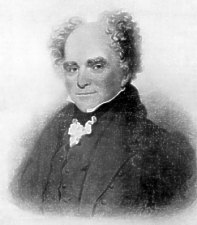
Rev James Wilks
|
George Wilks was from Dublin and had married Ann Christian
of Peel probably in Dublin . According to the article in JMM #57 John married Margaret Moore of Billown (daughter
of Deemster Charles Moore) - no marriage found but in Charles Moore's will he leaves £5 to grandson James Wilks.
Ann Wilks als Christian died in Dublin in 1719 leaving three children John, Mary and Ann - the two daughters remained
in Dublin - John is first noted as a father of son John in Malew in 1717 (John died young and is buried Malew in Nov
1724 - in the probate of his mother Ann he is given Powers of Attorney from father George and sisters in Dublin dated
Oct 1720; by May 1721 George appeared in court and acknowledged the Power of Attorney - George and family unsuccessfully
sued Ann's siblings for a share of certain property in Peel but eventually came to agreement and the property is sold
to Hugh Cannon in 1729. John in a deed dated 30 Sept 1720 buys from Nich Woods(Ballasalla) for £10 a dwelling
house + garden with a little house adjoining to north end of dwelling house situtate at lower end of Ballasalla adjacent
to a field of Deemster Moore's known as Bwolley Muck,rent 3d - John is noted as smith now in Ballysally - in April
1721 he buys a little croft known as the Small Croft (lds rent 4d) and sells the property acquired from Nich Woods
for £13 'to supply our own necessity' to pay off a £5 mortgage on the first property. This property would
appear to remain his home until sold in 1740 when described as a dwelling house,brewhouse + cowhouse lying near the
cross in Ballasalla(intack rent 4d); George and first son John were
engaged in minting of 1733 currency at Derbyhaven - George died 1743 in Ballasalla.
Second son of John was James Wilks (born at Ashehold, Santan, 26 July 1719) - first marriage was to Margaret Woods
(daughter of Vicar General Woods) by whom had 6 children. second wife was Elizabeth
Christian (daughter of William Christian of Ballamoore Jurby and Ann Mylrea (daughter of Deemster Mylrea).
|
Reference
'One of the most able Manx Clegymen of his time' J. Manx
Museum IV #57 Dec 1938 pp71/2


